
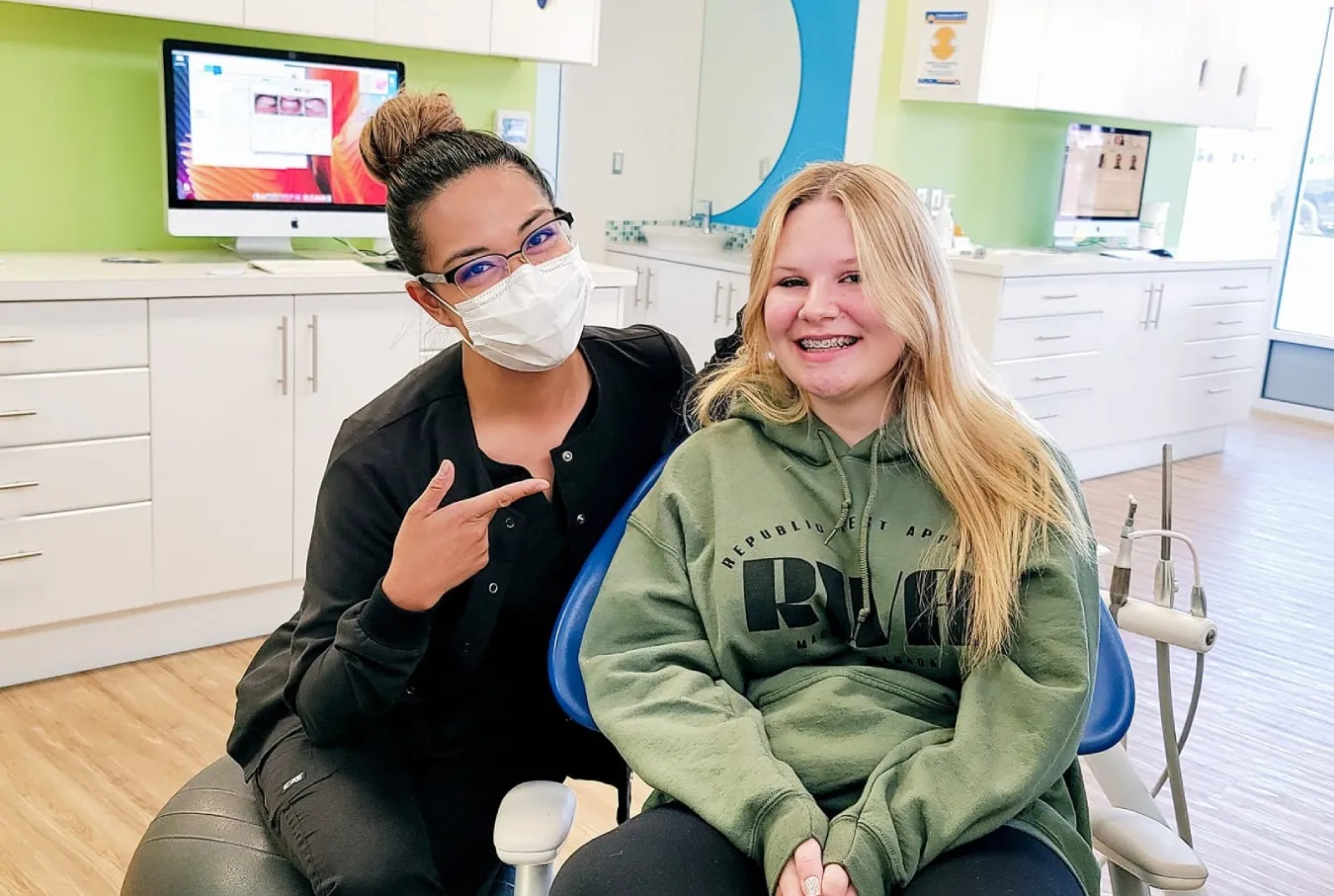
Modern braces are smaller, more comfortable and more precise than the braces many adults remember. In Kelowna, Straight Smiles offers metal braces and tooth-coloured clear braces, planned with 3D scanning and imaging and often paired with custom SureSmile wires.
Braces are about more than looks. Straight teeth are easier to clean, and a corrected bite spreads chewing forces more evenly. Here is how today's braces work, what has changed, and how they support healthier teeth for kids, teens and adults.
How Do Braces Actually Move Teeth?
Braces use small brackets bonded to the teeth and an archwire threaded through them. The wire applies light, steady pressure, and the bone around each tooth slowly remodels to let it move. Over months, that gentle force guides teeth into straighter positions and brings the upper and lower teeth together properly.
Elastics or other appliances are sometimes added to correct the bite. You will see Dr. James Scramstad regularly so he can check progress and make changes. Because braces are fixed in place, they keep working all day without anyone needing to remember them, which is one of their biggest advantages.
What Makes Today's Braces Different?
Brackets are smaller and more comfortable than they used to be, and the planning behind them has changed even more. At our office, treatment starts with an iTero digital scan instead of messy impression trays, building a precise 3D model of your teeth. CBCT imaging adds three-dimensional views of the teeth, jaw and facial structure for cases that need a closer look.
The wires have changed too. SureSmile technology uses 3D imaging and robotic precision to custom-design archwires for each patient. Because each wire is shaped for your plan, teeth move more directly toward their ideal position, with fewer adjustments and less unnecessary movement. You can read about each tool on our orthodontic technology page.
Metal or Clear Braces: Which Fits You?
Both types work the same way and give excellent results. The right choice depends on your treatment needs, your preferences and your budget.
| Consideration | Metal braces | Clear braces |
|---|---|---|
| Material | High-quality stainless steel | Tooth-coloured ceramic |
| How noticeable | Visible, with colourful elastics if you like | Blend in with your teeth |
| Strength and range | Durable; suits a wide range, including severe cases | Suits moderate to complex cases |
| Cost | Typically the most affordable comprehensive option | Quoted after your exam |
| Popular with | Patients of all ages | Teens and adults who want a low-profile look |
| Staining | Not a concern | Designed to resist staining |
Some patients compare braces with removable trays too. If that is you, our clear aligners page explains Invisalign, Angel Aligners and SureSmile Aligners and how they differ from fixed treatment.
How Do Braces Lead to Healthier Teeth?
Crowded and overlapping teeth create tight spots where plaque collects and a toothbrush cannot reach. Once teeth are aligned, brushing and flossing work better, which lowers the risk of cavities and gum disease. That is the main reason braces matter for long-term health, not just appearance.
Bite problems have their own costs. Overbites, underbites and crossbites can cause jaw discomfort, make chewing harder and wear some teeth unevenly. Correcting the bite spreads those forces more evenly. Closing gaps can also help with chewing and speech in some cases.
When Is the Right Age for Braces?
There is no single right age, but timing does matter. We recommend a first evaluation by age 7, when early problems are easier to spot. Children who need early help may start Phase One treatment between 7 and 10, and full braces usually begin around 11 to 14, once most permanent teeth are in. Our page on braces for kids goes into more detail.
For teens, braces usually take 12 to 24 months. Adults can get braces too. Treatment may take a little longer because the jaw is no longer growing, with most adult cases lasting 12 to 30 months. See braces for adults if you are weighing treatment later in life.
Whatever the age, the plan starts with the same steps: an exam, a review of your records and a clear explanation of what treatment would involve. Not every child who comes in for an early visit needs braces right away. Often the answer is to keep an eye on things and check again as more adult teeth arrive, and that is useful to know too.
What Happens at a Braces Consultation?
Getting started is straightforward. Before your visit, fill out the new patient form and send any X-rays taken in the last year. No X-rays? We can take digital X-rays at the office. If you have insurance, send a photo of your card along with the policyholder's name and date of birth so we can check your coverage.
When you arrive, our treatment coordinator will show you around and may take digital photographs and X-rays. Dr. Scramstad then examines your mouth, assesses your bite and reviews your records to reach a diagnosis and build a personalized plan. He will explain your options, whether metal or clear braces suit you, and how long treatment is likely to last.
Before you leave, you will receive a written financial quote. If your dental plan includes orthodontic coverage, we direct bill your provider. We accept Visa, MasterCard, Interac, e-Transfer, cheque and cash, and our team will help you choose a payment plan that fits your budget.
How Do You Care for Teeth During Braces?
Good habits protect your teeth and keep treatment on schedule. Brush after every meal with a soft-bristled toothbrush and fluoride toothpaste, and floss daily with a floss threader. A water flosser helps clear food from around brackets. Orthodontic wax soothes spots where a bracket rubs.
Food choices matter as well. Avoid sticky foods such as gum, caramel and taffy, hard foods such as nuts, ice and popcorn, and chewy foods such as bagels and tough meats. Soft fruits, yogurt, pasta and smoothies are good choices, especially in the day or two after an adjustment, when mild soreness is common.
Frequently Asked Questions
How long do braces take?
It depends on age and complexity. Teen treatment often takes 12 to 24 months, and most adult cases take 12 to 30 months. Dr. Scramstad will give you an estimate at your consultation.
Do braces hurt?
Braces can cause mild soreness for a day or two after they go on and after adjustments. Soft foods, orthodontic wax and over-the-counter pain relievers help.
Are clear braces as effective as metal braces?
Clear braces work just like traditional braces. Metal braces are especially well suited to severe misalignment, and Dr. Scramstad will tell you which suits your case.
Does insurance cover braces?
If your dental plan includes orthodontic coverage, we direct bill your provider and help you make the most of your benefits.
Request Your Braces Consultation in Kelowna
A consultation is the easiest way to see which braces fit your teeth, your schedule and your budget, and you will leave with a written financial quote. Learn more about braces in Kelowna, then request a consultation with Dr. Scramstad or call or text (778) 946-6325.